Paint Restoration Guide · 5 min read
What Is Paint Correction? Swirl Removal Explained Step By Step
Short Answer
Paint correction is the machine polishing process that permanently removes swirl marks, wash scratches, water spots and oxidation from your clear coat rather than hiding them with filler wax. At Grandlux Detailing correction starts at $300 depending on vehicle size and defect severity, and is performed at your home or office in the Frisco area.
Updated 2026-08-23 · Written by the Grandlux Detailing DFW team, certified and fully insured mobile detailers serving Frisco, Texas.
The Defects Paint Correction Removes
Almost everything people call 'scratches' on a daily driver are swirl marks, thousands of shallow circular scratches in the clear coat, created by automatic washes, dirty wash mitts and dry towels. In direct sun or under a light they show as a spider web halo.
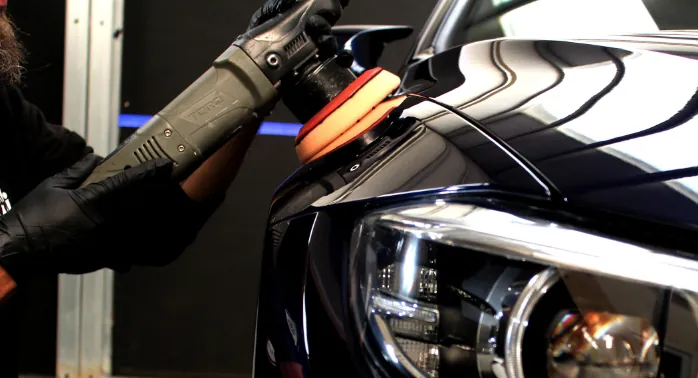
Correction levels the clear coat around those defects using abrasive polish and a machine polisher, so light reflects evenly again. It is a removal process, not a covering process, which is why the result does not wash away.
- Swirl marks and wash marring from tunnel washes and improper drying
- Water spot etching from sprinklers and hard North Texas water
- Oxidation and dullness on sun baked horizontal panels
- Bird dropping and bug etching caught before it reaches the base coat
- Light buffer trails and holograms left by careless previous polishing
Single Stage vs Multi Stage Correction
The number of stages describes how many machine passes with different abrasive levels the paint receives. More stages means more defect removal, and more time, which is what you are actually paying for.
Single stage polish (roughly 60 to 70% defect removal)
One pass with a medium polish and finishing pad. Ideal for newer vehicles, light swirling, or as prep before a coating on well kept paint.
Two stage correction (roughly 85 to 95% defect removal)
A cutting compound pass to remove deeper defects, followed by a refining polish to restore full gloss. This is the most common choice on a three- to seven year old daily driver.
Three stage / show correction (95%+)
Heavy cut, refine and jewel, usually with paint depth readings taken throughout. Reserved for dark show cars and neglected finishes where maximum clarity is the goal.
How The Process Works On Your Driveway
Correction cannot be rushed and it cannot be done over a dirty car. The full sequence takes anywhere from four hours to two full days depending on the stage and size of the vehicle.
- Wash and chemical decontamination to remove iron fallout and tar
- Clay bar treatment so bonded contaminants are not dragged across the paint
- Paint depth readings and a test spot to confirm the safest pad and polish combination
- Machine polishing panel by panel with regular inspection under dedicated lighting
- Panel wipe with an IPA solution to reveal true results with no filler left behind
- Protection applied, sealant or ceramic coating, to lock in the corrected finish
Does Your Car Actually Need Correction?
A simple test: park in direct sunlight or shine a phone torch at the paint from a low angle. If you see a circular web pattern, that is swirl marking and only correction removes it. If the paint looks clear but feels rough like fine sandpaper, you need decontamination and clay, not polishing.
Correction removes a small measured amount of clear coat, so it is not something to repeat every year. Done once and followed by a ceramic coating and proper washing, most vehicles never need heavy correction again.